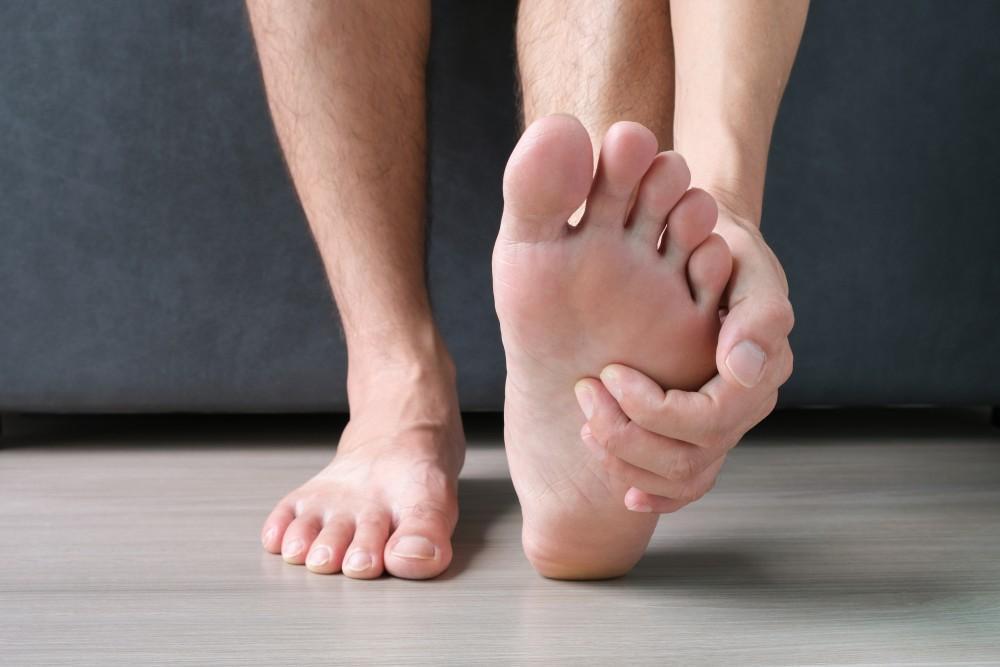
Do you hesitate to get out of bed and take your first steps in the morning because your heel feels like it’s been stabbed? You likely have plantar fasciitis.
Sports medicine specialist and board-certified orthopedic surgeon Dr. Jonathan Shults with Coastal Empire Orthopedics treats foot, ankle, and other common orthopedic injuries to help you move freely again.
What is plantar fasciitis?
Each of your feet has a tough ligament, the plantar fascia. These ligaments help cushion your feet from the pounding they take every day. They are part of each foot’s arch.
If you have plantar fasciitis, the ligament swells when it’s inflamed. Now, you’re in pain.
Plantar fasciitis can be an overuse injury. If you run, jump, or stand for hours on the job or during other activities, tension on the plantar fascia may eventually result in painful inflammation. Having flat feet, tight calf muscles, or a very high arch can also contribute to plantar fasciitis, as can wearing shoes that provide no support.
How to relieve and prevent plantar fasciitis
You want relief from your throbbing, stabbing heel pain. Your foot can be especially painful in the morning, when the ligament stretches out as you put your foot on the ground. Here are some tried-and-true remedies to help relieve painful plantar fasciitis.
Stretch the plantar fascia both morning and night
You can use a light resistance band to stretch your plantar fascia both in the morning and at night.
Place the band over the ball of your foot and hold the ends in your hands with a firm grip. Keep your leg straight and pull the band toward you, flexing your foot and toes backward. Stretch each foot for 30 seconds before your feet touch the floor. Keep your band close to your bed so you can reach it before you get up.
Keep a tennis ball by your bed as well. Both morning and night, roll the arch of your foot over the ball to loosen the ligament.
Perform calf stretches
After sleeping all night or sitting for a prolonged period, your calf muscles become tight. This creates pressure on your Achilles tendon, which in turn places undue tension on your plantar fascia.
After you use the resistance band to stretch your plantar fascia, perform calf stretches against the wall. Place your hands on the wall with one leg forward and one leg back, keep both heels on the floor, and lunge forward with your front leg. You’ll feel the calf stretch.
Choose shoes with good arch support and discard worn-out shoes
Worn-out shoes and footwear with no support worsen your plantar fasciitis. Stay away from flip-flops and high heels. Discard athletic shoes when their cushioning fades.
Choose a shoe that hugs your heel and keeps it stable. Make sure your shoe has good arch support. Orthotics may ease the pain from your plantar fasciitis because they help distribute weight evenly across the foot.
Loosen the covers when you sleep
If you sleep on your back, tight covers force your feet to point downward. This position shortens and tightens your plantar fascia. When you take a step in the morning, you’re suddenly stretching the ligament by putting your full body weight on it. If the plantar fascia is already inflamed, you feel a stabbing pain.
Make sure the covers on your bed lie gently over you instead of wrapping you up snugly. Now they’re not pulling your feet downward.
Wear a night splint
Dr. Shults recommends wearing a night splint, especially if other remedies haven’t worked. The splint keeps your foot at 90 degrees, so the ligament doesn’t become constrained while you sleep. This helps alleviate that morning shock as you put your foot on the floor.
Call or message Coastal Empire Orthopedics in Savannah, Georgia, today if you have undiagnosed foot pain.